
Kyoto, Japan
Japan's thousand-year capital: raked-gravel gardens, torii-lined hillsides, tea houses in Gion, and autumn maples that turn whole temple grounds red.
Kyoto was Japan's imperial capital for over a thousand years, and it kept the temples, gardens and craft traditions that Tokyo mostly traded for skyscrapers. It is the city travellers picture when they picture "old Japan".
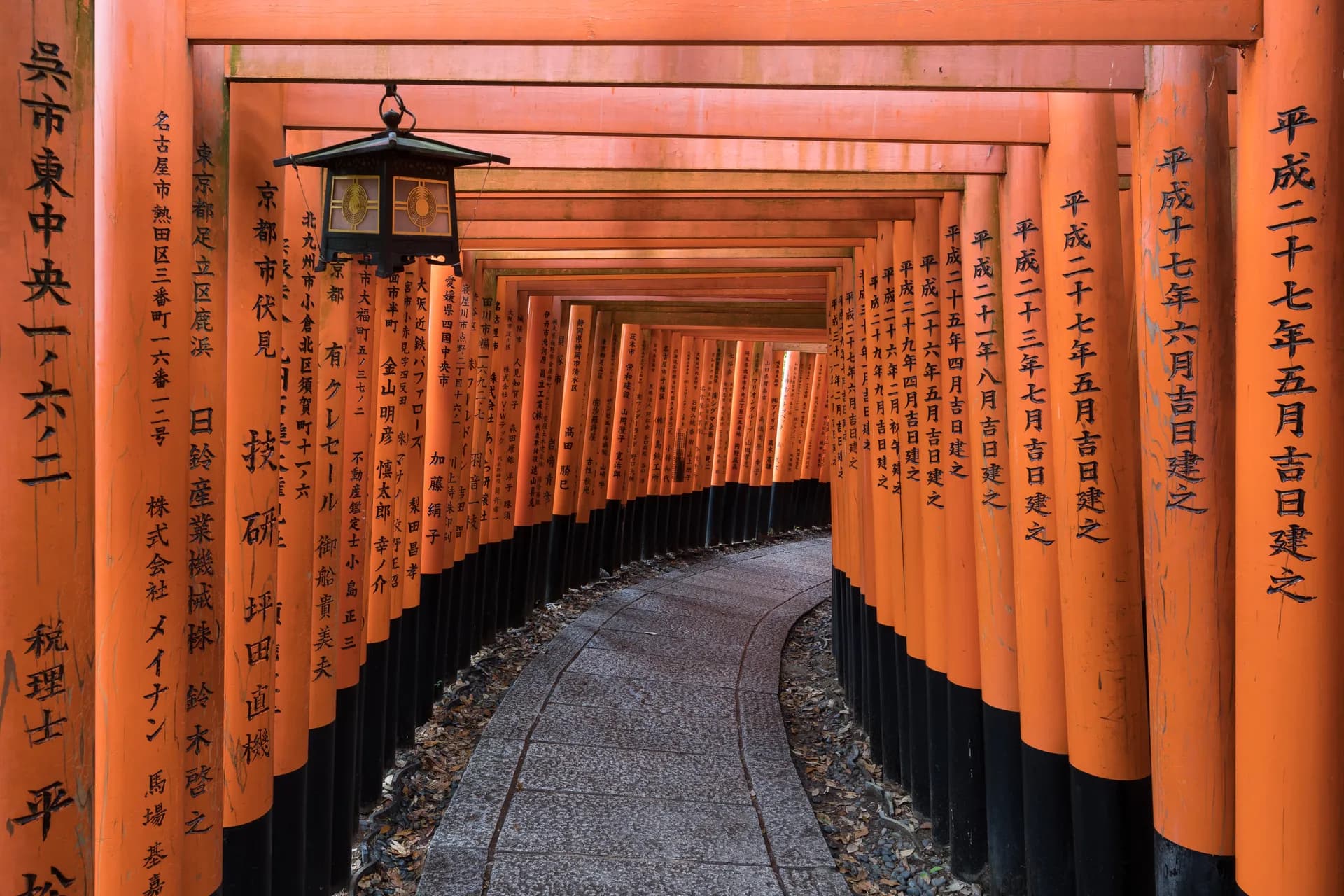
The headline sights are spread around the edges of the city. Fushimi Inari-taisha, with its tunnels of vermilion torii gates climbing a wooded mountain, is best at dawn before the crowds. Kinkaku-ji (the Golden Pavilion) sits gold-leafed above a still pond; Arashiyama in the west has the famous bamboo grove, the Togetsukyo bridge and monkey park; and Kiyomizu-dera's great wooden terrace looks back over the whole city.
Gion is the old geisha district — wooden machiya townhouses, lantern-lit lanes, and a real chance of seeing a geiko or maiko hurrying to an appointment in the early evening. Photograph respectfully; the private streets have rules against blocking residents.
Things to do beyond temple-hopping: a tea ceremony, a kaiseki multi-course dinner, a morning at Nishiki Market ("Kyoto's kitchen"), a day trip to nearby Nara to meet the bowing deer, and cycling the flat central grid between sights.
Kyoto food is refined and seasonal — kaiseki, yudofu (hot tofu) near the temples, matcha sweets, yuba (tofu skin), and Kyoto-style obanzai home cooking. Vegetarian shojin-ryori temple cuisine is a genuine speciality here. Muslim travellers will find a growing number of halal-friendly restaurants near Kyoto Station and the university district, plus prayer spaces at the station and Kyoto Tower.
Late March to early April is cherry blossom season — spectacular and very busy. Mid-November to early December is the maple-leaf peak. Summer is hot and humid with big festivals (Gion Matsuri in July); winter is quiet, cold and occasionally dusted with snow, which suits the gardens.
Kyoto is about 2 hours 15 minutes from Tokyo by Shinkansen. In the city, buses reach most temples and the two subway lines cover the centre; an IC card (Suica/ICOCA) works on everything. Many travellers base here and day-trip to Osaka, Nara and Himeji.
Travel Tips
- Visit Fushimi Inari and Arashiyama's bamboo grove right at sunrise — by mid-morning both are shoulder-to-shoulder.
- A one- or two-day bus pass plus an ICOCA card covers almost all temple travel within the city.
- Book kaiseki dinners and any tea-ceremony experience a few weeks ahead in blossom and autumn seasons.
- Base in Kyoto and day-trip to Nara, Osaka and Himeji rather than changing hotels.
- Visa and entry rules for Bangladeshi passport holders change often — confirm the current requirements with the country's embassy or official immigration website before you book.
- Budget figures here are rough planning estimates, not live prices — check current fares and hotel rates close to your travel dates.