
Bhutan
The Himalayan kingdom that measures Gross National Happiness — cliff-clinging monasteries, fortress-monasteries in every valley, and a low-volume, high-value approach to tourism.
Bhutan is one of the closest international destinations to Bangladesh — a short flight to Paro, or an overland route via the border town of Phuentsholing. It manages tourism deliberately: independent foreign visitors pay a Sustainable Development Fee per night (rates have changed several times, so confirm the current amount and any regional concessions before planning). The result is uncrowded trails and well-kept sites.
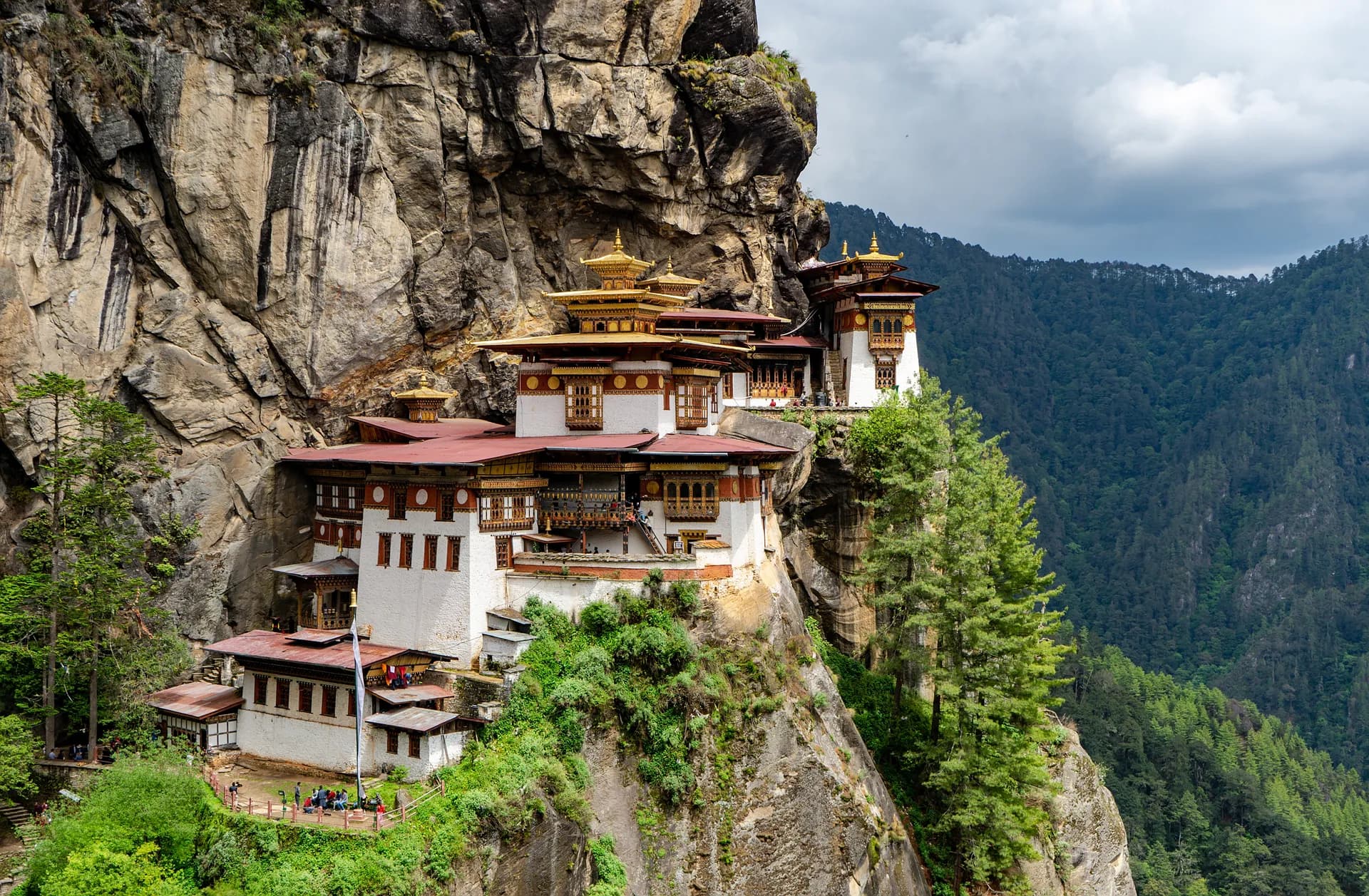
Most trips centre on the western valleys. Paro has the country's only international airport, the National Museum in a round watchtower, and the trek up to the Taktsang (Tiger's Nest) monastery, which clings to a cliff 900 m above the valley floor — a half-day hike that is the defining image of Bhutan.
Thimphu, the small capital, has no traffic lights, the giant Buddha Dordenma statue overlooking the city, the weekend market, the Motithang takin preserve (the national animal), and traditional arts and textile institutions. The drive east crosses the Dochula Pass, lined with 108 stupas and, on a clear day, a wall of white Himalayan peaks.
Punakha, lower and warmer, has Bhutan's most beautiful dzong at the junction of two rivers, a suspension bridge, and gentle valley walks. With more time, the Phobjikha Valley is a glacial bowl where black-necked cranes winter.
Things to do are cultural and outdoors: visiting dzongs and temples (dress respectfully, some inner areas are closed to non-worshippers), attending a tshechu festival with masked dances if your dates align, day hikes, archery matches, and a hot-stone bath. Food is chilli-heavy — ema datshi (chillies and cheese) is the national dish — with rice, buckwheat, momos and butter tea; menus in hotels are milder and often include Indian and continental options.
March–May brings blossoms and clear mornings; September–November has the best mountain visibility and festival season. Winter is cold but bright at lower elevations; the monsoon (June–August) is green but wet with cloud on the passes.
There are no domestic flights or trains for tourists; travel is by road with a driver, on winding mountain highways, so build in generous transfer times.
Travel Tips
- Confirm the current Sustainable Development Fee and any SAARC/regional rates before you budget — the policy has changed repeatedly.
- Train for the Tiger's Nest hike with a few uphill walks beforehand; start early and pace yourself with tea-house breaks.
- Time your visit to a tshechu festival if you can — the masked dances are the cultural high point of the year.
- Road transfers are slow and winding; plan two nights minimum per valley rather than day-hopping.
- Visa and entry rules for Bangladeshi passport holders change often — confirm the current requirements with the country's embassy or official immigration website before you book.
- Budget figures here are rough planning estimates, not live prices — check current fares and hotel rates close to your travel dates.